
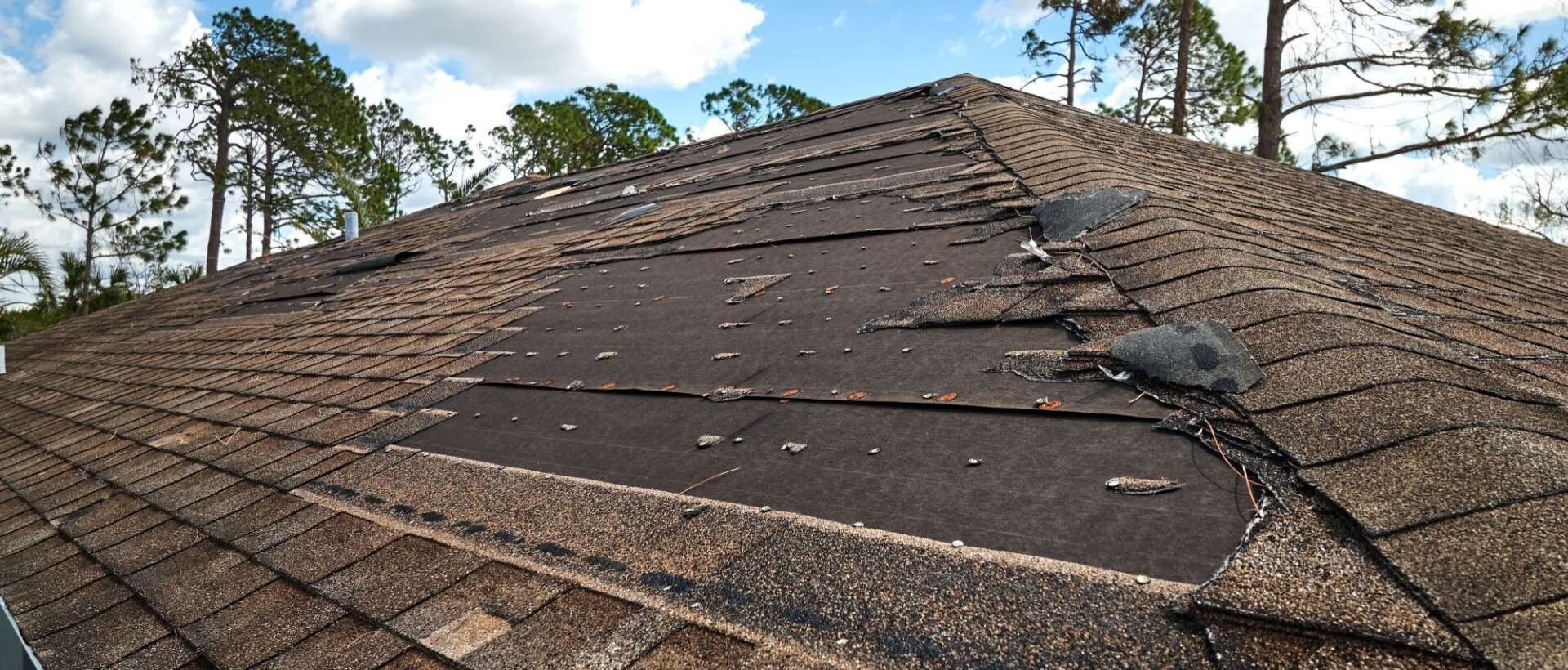
A roof replacement estimate can change how you feel about selling your Dallas house. Perhaps a spring hailstorm left damaged shingles, a ceiling stain keeps returning, or a buyer’s inspection revealed wear you did not realize was serious. Now you are weighing a major expense before the house can even go on the market.
You can generally sell a house with a bad roof in Dallas, TX, without replacing it first. Buyers can agree to accept roofing defects, but the roof’s condition may affect mortgage approval, insurance, inspections, and the amount offered. Texas disclosure obligations also still apply to many transactions.
Whether repairs are worthwhile depends on more than roof age. This guide explains Dallas permit rules, hail insurance and deductibles, and how to compare replacing the roof with selling as-is—using estimated net proceeds, not just the sale price.
Can You Sell a Dallas House Without Replacing the Roof?
Yes. A Texas home sale does not generally require a new roof simply because the existing one is old or damaged. The buyer and seller can negotiate the condition in which the property transfers.
But an as-is contract is not a promise that every buyer can finance or insure the house. A lender might require a roof issue to be corrected, and a buyer may request an inspection or seek a price reduction. An as-is sale also does not remove applicable seller-disclosure requirements.
Start by separating three questions: Is the roof actively leaking? What repairs does a qualified professional recommend? And what would each selling method leave you after expenses? See Greenseed’s Dallas home-selling page for a local direct-purchase option.
Common Roof Problems That Affect Dallas Home Sales
Aging or Worn Asphalt Shingles
Shingles can become brittle, curl, or lose protective granules with time. But a roof’s age alone does not establish its remaining service life. Installation quality, ventilation, prior maintenance, and actual wear all matter. Request a condition-based assessment rather than treating a particular birthday as an automatic replacement deadline.
Hail and Wind Damage
Dallas-area thunderstorms can damage shingles, flashing, vents, and gutters. Hail damage may differ from normal granule loss, and strong winds can loosen materials that previously appeared sound.
Document the storm date if known, photograph visible conditions from a safe position, and have a qualified roofer explain what was observed. Do not accept a contractor’s assurance that an insurer must buy a whole new roof.
Active Leaks and Interior Staining
A ceiling stain could reflect damaged flashing, a roof opening, or another water source. If the roof is allowing water inside, reasonable temporary protection may prevent further loss while you evaluate your options.
If moisture has affected drywall or insulation, separate the roof estimate from interior restoration costs. Greenseed’s water-damage selling guide explains those additional concerns.
Roof Decking and Structural Problems
Rotten decking, sagging roof areas, or damaged rafters can increase the scope of work. A contractor might not discover every concealed defect until shingles are removed.
Ask estimates to state how unexpected decking replacement will be priced. Structural concerns may warrant engineering advice and permits beyond ordinary re-roofing.
Does a Small Damaged Area Mean You Need a Whole New Roof?
Not necessarily. A repair may be appropriate if damage is isolated, surrounding materials are sound, and the roofing system can be restored properly. But matching old materials can be difficult, and a patch may not solve defects spread across multiple roof slopes.
Ask the contractor to explain why replacement is recommended instead of repair.
If the decision involves an insurance claim, remember that a roofer’s preferred scope and the insurer’s covered scope may differ. The seller can compare a properly documented localized repair, complete replacement, and offers from buyers willing to take on the work.
What to Check Before Paying for a New Roof
Get a written assessment. Ask for photographs, the location of defects, repair versus replacement options, and any known uncertainty about concealed materials.
Obtain comparable bids. Have contractors itemize removal, shingles or other coverings, flashing, ventilation, decking allowances, disposal, labor, permits, and warranties. The Texas Department of Insurance (TDI) recommends multiple written bids, checking references, and reading contracts carefully.
Check previous records. Find the installation date if known, repair invoices, permits, warranties, and insurance documents. Do not describe undocumented work as fully permitted or under warranty.
Protect the property if needed. Arrange safe temporary mitigation for an active opening or leak. Keep photographs and receipts, especially if an insurance claim may apply.
One useful comparison is the minimum work needed to stop further damage, the full replacement cost, and the price difference between offers made in those two conditions.
You need not commit to every cosmetic improvement merely because a contractor recommends replacement.
Does Dallas Require a Permit for Roof Replacement?
Most full roof replacements need a Dallas residential roofing permit.
The city’s Building Inspection FAQs exempt qualifying re-roofing on single-family or duplex homes when the total work value does not exceed $500.
The city’s Planning & Development project guide confirms that roofing work above that threshold generally requires a permit.
Because materials and labor for a full replacement normally cost far more than $500, that exemption rarely applies to complete re-roofing. Historic, conservation, and other specially regulated districts may have additional requirements even for work otherwise exempt.
The city also distinguishes ordinary roof coverings from structural repairs. Replacing damaged rafters or joists can require a separate building alteration permit.
The city’s storm-damage repair guidance explains the distinction and provides a contact number, 214-948-4480, for permit questions.
Before hiring a roofer, verify who obtains the permit, whether inspections apply, and how final approvals will be documented. Keep those records for prospective buyers. A contractor invoice is not the same thing as an approved permit.
If a buyer asks whether an old replacement was inspected, provide the records you actually have rather than guessing. A missing document does not automatically prove the work was illegal, but it can prompt additional due diligence or a request to verify the permit history with the city.
Does an Old Roof Automatically Make a Dallas House Uninsurable?
No. Texas insurers cannot decline or refuse to renew a homeowners policy solely because of the roof’s age.
In a September 29, 2026 announcement, TDI clarified that insurers may consider the physical condition of the home and roof but not reject coverage based only on how old they are.
That distinction protects a homeowner with an older, sound roof. It does not guarantee coverage for a roof with active leaks, missing shingles, or serious deterioration. Underwriting decisions may still depend on documented defects and other legitimate risk factors.
If an insurer raises an age-related concern, ask what specific condition supports its decision and whether an inspection would help.
TDI’s Voluntary Inspection Program may offer an avenue for certain owners having trouble obtaining insurance.
Will Homeowners Insurance Cover Roof Replacement in Texas?
Coverage depends on the cause of damage, policy wording, exclusions, and deductible.
A covered hail or wind event may qualify; ordinary wear, age-related deterioration, and poor maintenance generally do not create a claim by themselves.
TDI’s March 2026 roof-insurance guidance notes that policies differ in how much they pay, including whether a damaged section justifies replacing the entire roof.
Replacement Cost vs. Actual Cash Value
Under replacement-cost coverage, payment for covered damage is based on current repair or replacement costs, subject to policy conditions, deductibles, and any rules for releasing recoverable depreciation.
Under actual-cash-value coverage, depreciation can substantially reduce the insurer’s payment on an older roof.
TDI’s replacement cost and actual cash value explanation shows how dramatically different claim payments can be.
Ask the insurer how much is available before repairs and whether additional funds depend on completed work.
Wind and Hail Deductibles
Some Texas policies use percentage deductibles based on the home’s insured amount.
For example, a 2% deductible on $350,000 of insured value is $7,000.
That amount may leave the homeowner paying a substantial share of an otherwise covered roof replacement. See TDI’s deductible guide.
A roofing contractor cannot lawfully waive, absorb, or rebate your insurance deductible.
TDI’s roofing-and-insurance guidance also warns against contractors acting as public insurance adjusters on projects where they perform the repairs.
Can You Sell While a Hail-Damage Claim Is Open?
Potentially. An unsettled claim does not necessarily stop a sale, but the payment rights must be clarified.
Ask the insurer whether additional inspections are pending, who will receive future checks, whether the mortgage lender has an interest in the payment, and whether recoverable depreciation depends on completed repairs.
Keep the adjuster’s report and claim correspondence available for review.
TDI explains in its home insurance guide that repair checks for mortgaged homes may name both the owner and lender, with the lender releasing funds as work progresses.
Do not assume an open claim automatically transfers to the buyer or that the seller can retain every future payment.
Have the insurer, title company, and, when necessary, a Texas attorney clarify claim-related rights and write any agreement into the contract.
Will a Bad Roof Affect a Buyer’s Inspection or Mortgage?
It can. An inspector may document exposed materials, leaks, damaged decking, or an apparently short remaining service life. A buyer may request a specialist’s evaluation, repairs, credits, or a lower price.
For buyers using mortgage financing, an appraiser or lender may require corrections involving safety, moisture intrusion, or structural soundness.
FHA property standards are addressed in HUD’s Single Family Housing Policy Handbook; conventional lenders have their own applicable requirements.
An as-is agreement does not necessarily prevent inspections.
Under the terms of a Texas contract, a buyer may have a negotiated option period or other rights, and lender-required repairs can become a separate issue.
The Texas REALTORS® as-is and inspections FAQ explains these distinctions.
A cash buyer may avoid mortgage-specific conditions, but can still inspect the home and include contingencies.
Read the actual offer rather than relying on the label cash.
Ask About Buyer Insurance Before Negotiations Become Difficult
A buyer may like the home yet discover that the preferred insurer wants an inspection or documentation of existing roofing problems.
Encourage prospective purchasers to check coverage availability early instead of assuming that a roof issue will be resolved after the option period ends.
A professional roof report, photos of completed temporary work, and any available permit history may help answer legitimate questions.
These records do not guarantee insurance approval, but they can reduce uncertainty and make negotiations more informed. This is especially useful when the buyer needs both an acceptable insurance policy and a mortgage to close.
Should You Replace the Roof Before Listing?
Replacement is worth considering if the house is otherwise ready for market, restoration will expand the pool of buyers, and the expected increase in net proceeds exceeds the full project cost.
Calculate more than the roofing quote: add related interior repairs, permits, deductibles, utilities, insurance, property taxes, and the extra time before closing.
If an insurer will reimburse part of the job, verify what proceeds are genuinely available.
For a home with multiple major defects, a new roof alone may not make the house move-in-ready.
See Greenseed’s fixer-upper guide for the broader renovation decision.
Three Ways to Sell a Dallas House With a Bad Roof
1. Replace and list with an agent. This may support a higher sale price and wider buyer financing options, but requires upfront spending, coordination, and time. Agent compensation and other sale costs are negotiable.
2. List as-is. Investors or renovation-minded buyers may accept the roof in its current condition. Expect questions about inspections, insurance, and who pays for any lender-required work. Greenseed’s as-is selling guide provides further context.
3. Request a direct cash offer. A buyer may evaluate the home without requiring roof replacement before closing. The offer will reflect the roof condition and transaction risks, so the gross price may be lower. Review Greenseed’s purchasing process and request a no-obligation offer to compare the written terms.
Dallas Example: Replace the Roof or Sell As-Is?
Consider a hypothetical house in Lake Highlands with worn asphalt shingles, several damaged roof sections, and ceiling damage from a previous leak.
A roofer recommends replacement. For this comparison, assume no insurance reimbursement is available.
| Illustrative financial item | Replace and list | Direct as-is sale |
|---|---|---|
| Sale price | $345,000 | $277,000 |
| Mortgage payoff | −$157,000 | −$157,000 |
| Roof replacement | −$28,000 | $0 |
| Interior damage repairs | −$8,500 | $0 |
| Roofing permits and inspections | −$750 | $0 |
| Immediate protective work | −$1,200 | −$1,200 |
| Negotiated agent compensation | −$17,250 | $0 |
| Other seller closing costs | −$5,500 | $0 |
| Additional holding expenses | −$6,800 | −$2,200 |
| Existing tax or lien payoff | −$3,100 | −$3,100 |
| Illustrative net proceeds | $116,900 | $113,500 |
Hypothetical illustration only—not Dallas market averages, contractor estimates, or a Greenseed Home Buyers offer. No insurance proceeds are included. The direct-sale example assumes the buyer agrees in writing to cover ordinary seller closing costs and complete specified repairs after closing. Actual proceeds depend on condition, contract terms, taxes, liens, and other expenses.
Here, replacing the roof produces a $68,000 higher sale price, but only $3,400 more estimated net proceeds.
It also requires substantial cash before closing. If coverage pays most of the replacement expense, however, repairing first could become far more attractive.
Use your own estimates and likely offers to compare net proceeds—not the selling price alone.
Do You Have to Disclose Roof Problems in Texas?
For many previously occupied single-family homes, Texas Property Code Section 5.008 requires a Seller’s Disclosure Notice, subject to statutory exceptions.
The Texas Real Estate Commission’s notice, effective May 28, 2026, asks about roof information and relevant known problems.
Disclose known leaks, previous repairs, and other responsive conditions accurately. Keep invoices, warranty papers, and permits where available.
Selling as-is does not automatically eliminate disclosure obligations or excuse misleading statements.
If you are selling through an estate or another potentially exempt transaction, have a qualified Texas professional determine whether the statutory notice is required.
Our Dallas inherited-property guide discusses the separate question of who has authority to sell.
Selling a Dallas House With Roof Damage and Other Property Issues
Vacant property: An unnoticed roof opening can allow moisture to spread. Secure the house, consider temporary protection, and check vacancy-related policy terms.
Inherited property: Establish legal authority and review estate debts before accepting an offer. The roof condition does not replace probate and title requirements.
Code or safety issues: Roof-related structural conditions or unpermitted prior work may warrant city review. For a separate example of how enforcement affects sales, see our Fort Worth code-violations guide.
Mortgage or tax pressure: A new roof can be difficult to fund when other payments are overdue. Our back-property-taxes guide covers one related obligation. A pending sale does not automatically extend foreclosure or tax deadlines.
Checklist Before Accepting an Offer
- Document the roof. Save inspection photos, repair history, and contractor findings.
- Compare estimates. Include permit costs and allowances for concealed decking damage.
- Review insurance. Check the cause of loss, coverage type, claim status, and deductible.
- Clarify claim payments. Identify any lender rights or recoverable depreciation.
- Confirm Dallas permits. Ask whether the planned work needs roofing or structural approvals.
- Prepare disclosures. Describe known defects truthfully under the applicable form.
- Calculate net proceeds. Compare repair costs, commissions, holding expenses, and offers.
- Read the contract. Confirm contingencies, repair responsibilities, closing costs, and deadlines.
How Greenseed Home Buyers Fits Into the Comparison
If the roof needs major work and replacement is not practical, Greenseed Home Buyers offers a direct-purchase option for Dallas homeowners to evaluate.
Any offer depends on property condition, title, location, and the proposed terms.
You can learn about Greenseed Home Buyers, read customer reviews, and browse its FAQs.
There is no obligation to accept an offer. Compare it with a repaired listing and other as-is offers before deciding.
Frequently Asked Questions About Selling a House With a Bad Roof in Dallas, TX
1. Can I sell a house with a bad roof in Dallas, TX?
Yes. You can generally sell it without replacement, subject to disclosures, contract terms, and closing requirements.
2. Do I have to replace my roof before selling?
Not necessarily. Some buyers accept roofing problems, although price, financing, and insurance may be affected.
3. Will insurance replace an old roof in Texas?
Not just because it is old. Coverage depends on a covered cause of damage and the policy terms.
4. Can an insurer reject my home solely because of roof age?
No. Texas prohibits denial or nonrenewal solely for age, but physical roof condition can affect coverage.
5. Do I need a Dallas permit to replace my roof?
Usually. Qualifying single-family or duplex re-roofing valued at $500 or less is generally exempt; larger work typically needs a permit.
6. Can I sell while a hail-damage claim is open?
Potentially. Clarify future payments, mortgage-lender interests, and contract terms first.
7. Can roof problems affect mortgage approval?
Yes. Significant leaks or structural defects may require repairs or further inspection under the loan program.
8. Must I disclose roof leaks when selling in Texas?
Generally, applicable seller disclosures address known roof problems, leaks, and repairs, subject to statutory exceptions.
9. Can I sell an inherited Dallas house with roof damage?
Yes, if the seller has legal authority and the transaction satisfies title and other requirements.
10. Will Greenseed Home Buyers consider a house with a bad roof?
Yes. The company considers homes needing repairs; offers depend on condition and purchase terms.
Compare Your Options Before Selling a Dallas House With a Bad Roof
A damaged roof does not automatically mean you must pay for replacement before selling.
The best choice depends on the repair scope, available insurance funds, buyer requirements, and what each approach leaves you after closing.
To explore a direct sale, contact Greenseed Home Buyers or call (817) 835-7361.
You can also request a no-obligation cash offer and review the written terms before deciding.
Disclaimer: This article provides general educational information, not legal, insurance, tax, or financial advice. Roofing permits, coverage, disclosures, and transaction requirements vary. Consult the City of Dallas, your insurer, and qualified Texas professionals about your property.